
Wrapped in Dignity
How One Act of Care Became Ron's Legacy
When Linda Lauder thinks about the day her younger brother Ron left hospice, one detail stays with her more than any other: he was covered with a quilt.
Joseph "Ron" Swimmer died in Edmonton on August 21, 2024, just two months after being diagnosed with cancer. For Linda and her family, his illness and death moved faster than they could ever have been ready for. "Even though death is coming for all of us and we prepare, when it happens we still feel so
unprepared," she says.
Linda is 76 now, one of nine siblings. She and Ron, her "baby brother," were the two youngest. His illness lasted barely two months — he was diagnosed on June 22 and gone by August 21. As he was transferred from the Gene Zwozdesky Centre into the care of Park Memorial, the hospice team did something simple but deliberate: they covered him with a quilt.
"That was such a dignified way to care for my brother", Linda remembers. "We so appreciated that final act of care." In a moment defined by the harsh reality of death, the quilt softened something — and Linda never forgot it.
The little brother who could fix almost anything
When Linda talks about Ron, grief and affection sit side by side. "He was the nicest man. Everyone who knew him misses him and his humour."
Ron was a journeyman auto repairman — self-made, mechanically gifted, and curious for as long as anyone could remember. Growing up on the family farm, he was the kid who took apart radios and clocks simply because he wanted to understand how they worked, then put them back together again.
Linda tells one story often. Their father had a small tractor that broke down. He pulled the faulty part and drove into town to have it fixed or replaced. While he was gone, Ron — still a boy — figured out the problem himself. By the time their father got back, the tractor was running.
That mix of ingenuity, humour, and determination followed Ron through his whole life. Then, without warning, his family had to learn how to live without him. "I'm so glad I'm the one staying behind", Linda says. "I wouldn't have wanted Ron to go through what I'm going through".
A goodbye that brought peace
By the time Ron died, his illness had changed his body considerably, and Linda admits she was afraid to see him afterward. "Because of his illness, my brother was so slight when he died. I was honestly a little scared to see him."
What she found instead was relief.
"Park Memorial was the best care. Everything was done in the best way possible, and our funeral director was incredible. The team made him look so great. He looked so good. It allowed me to have peace."
That experience — and the quilt that had covered Ron when he left hospice — stayed tangled together in Linda's memory of caring for her brother after his death. She later learned the quilt had belonged to the hospice; Park Memorial had no quilts of its own for transfers. Linda decided to change that.
Turning grief into something another family could feel
Linda began making quilts in Ron's memory, sewing them at her home in Nanaimo, British Columbia, and sending them to Park Memorial in Edmonton. Her reason for doing it hasn't changed. "I want other people to feel comfort like we felt", she says, "especially for those who have nobody there when they die."
The quilts serve some of the quietest moments in funeral care: covering someone during a transfer, draping gently during an identification or viewing, or serving as a casket overlay when appropriate. They don't erase the reality of death... they just make it a little more human.
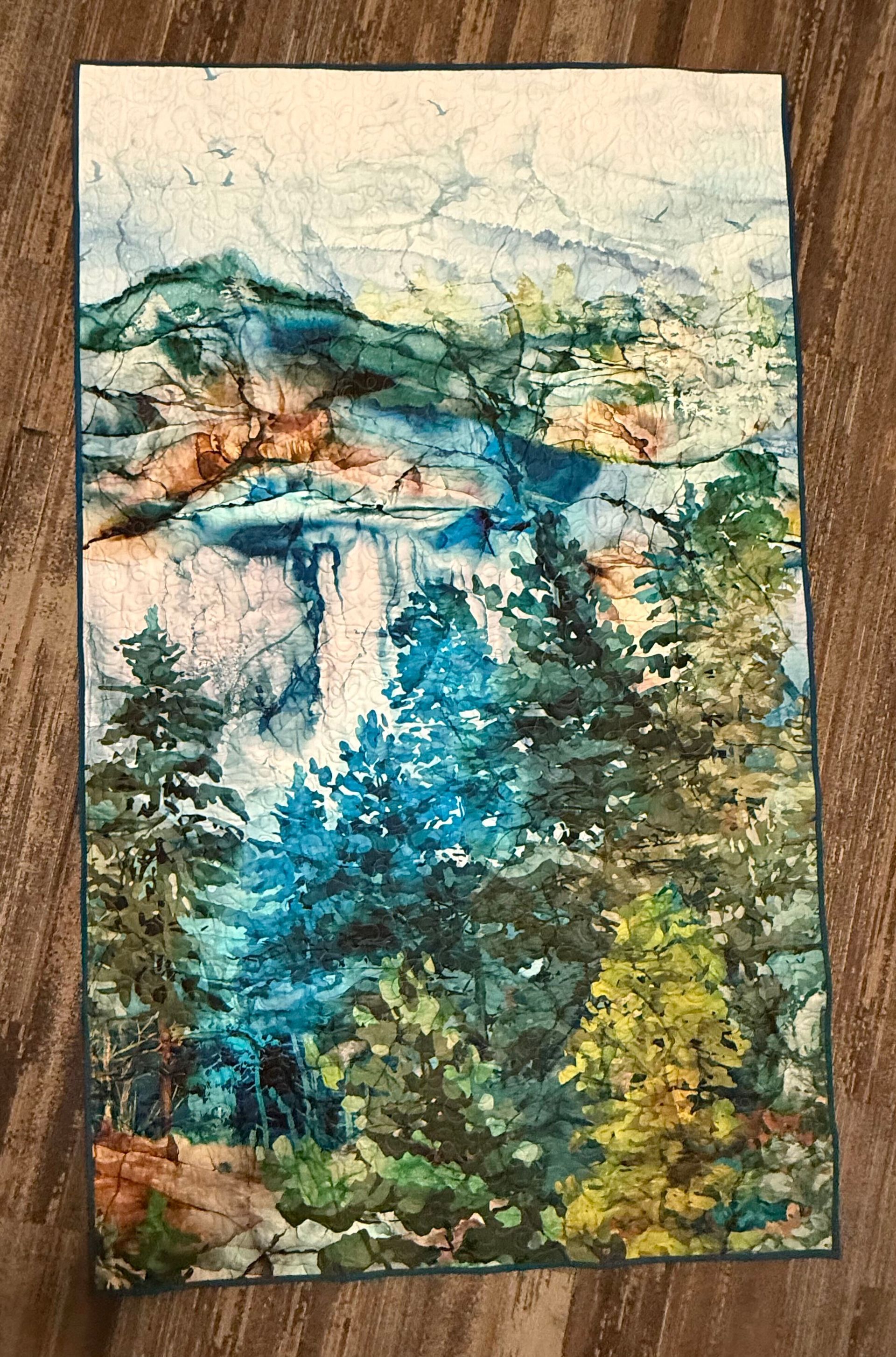
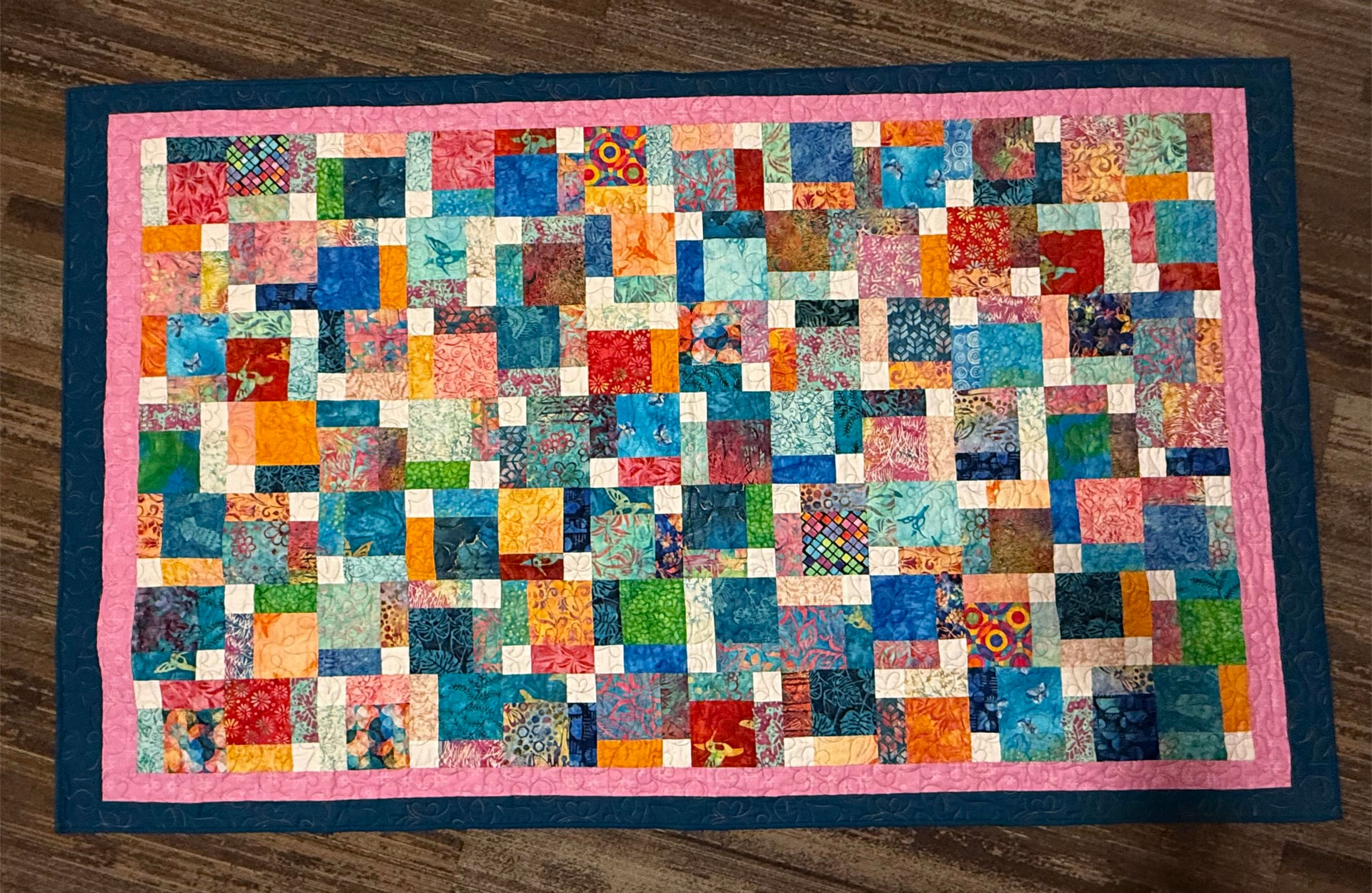
Linda thinks carefully about how each quilt will actually be used. She makes them reversible and pays attention to the direction of the pattern, so either side can end up facing a grieving family. Her newest quilt shows what she means: one side is an intricate patchwork of colour — pinks, blues, greens,
oranges, dozens of pieces joined together. Flip it over and it becomes a quiet landscape of trees, water, mountains, and sky. Two sides of the same quilt, both made with a stranger in mind.
For the family watching — and for the person with no one
In the handwritten letter that came with her most recent quilt, Linda explained what she pictures when one is used. She thinks of family members standing nearby as someone they love is carried from a room, and hopes the quilt offers them some comfort. Then her thoughts go further, to the person who might die with no one there at all. Her hope is that even they will be treated with love and dignity.
That's the part of Linda's gift that says the most about her. She will likely never know the names of most of the people her quilts cover, never meet their families, never learn which quilt was chosen or what someone felt when they saw it. That isn't why she makes them. She makes them because once, when
her own family was living through an unbearable goodbye, someone covered her baby brother with something beautiful — and it mattered.
Two years on, Ron's life still reaches people he never knew, one quilt at a time. Asked what remains underneath all the sewing, giving, and remembering, Linda doesn't complicate the answer. "I miss him so much".
That may be exactly why the quilts mean what they do. They aren't an attempt to move past grief. They're something she's made from it — and somewhere in Edmonton, when another person leaves the place where they died, one of Ron's quilts may be there to wrap them in dignity.
Shared with permission.
To receive more beautiful, meaningful stories like Linda’s, please
click here to subscribe to our
newsletter.