
The Digital Side of Loss No One Prepares You For
What families often discover in the days after a death — and how a little preparation can make a difficult time more manageable.

Most people assume a death certificate is what closes everything.
It isn’t.
It’s the document that allows things to begin.
In the first days after a death, families are often focused on the visible pieces — funeral arrangements, paperwork, notifying close family.
What’s less visible — and often more complex — is everything that lives behind a screen. Phones. Email accounts. Banking logins. Subscriptions. Authentication apps. Access to those things doesn’t automatically transfer when someone dies.
And in many cases, the person who knew how everything was set up is no longer there to explain it.

A phone, for example, can become difficult to access if no one knows the passcode.
Features like Face ID or fingerprint recognition are designed for the user — not for others — and may require a passcode after a period of time or inactivity. Without that passcode, gaining access to the device — and what’s stored on it — can be very limited.
Companies like Apple do have processes for requesting access to an account after someone has died, but those processes can take time and don’t always provide access to everything families might expect.
And the phone is often just the starting point. Many accounts now use two-factor authentication — meaning access may depend on:
- A code sent to a phone
- An authentication app
- A secondary email account
- Or recovery information that only the account holder knew
Without that information, even simple tasks can take longer than expected.

At the same time, not everything stops right away.
Subscriptions, memberships, and recurring payments don’t automatically cancel. They continue until someone:
- Knows they exist
- Identifies how they’re being paid
- And takes the steps to cancel them
None of this is impossible to manage. But it can take time — especially when you’re trying to piece things together while also grieving.
This isn’t about being unprepared.
Most people are managing their lives exactly the way the world has taught them to:
- With strong passwords
- With private devices
- With layered security
Those are good things. But they can make things harder for the people we leave behind if no one else knows how to navigate them.
The simplest way to ease that burden isn’t complicated. It’s having a clear, shared understanding of:
- Where important information is kept
- How accounts are accessed
- And who knows how to step in if needed
That might look like:
- Writing things down in a secure place
- Using a password manager with shared access
- Setting up legacy contacts on key accounts
- Or simply having a conversation
Because the reality is this:
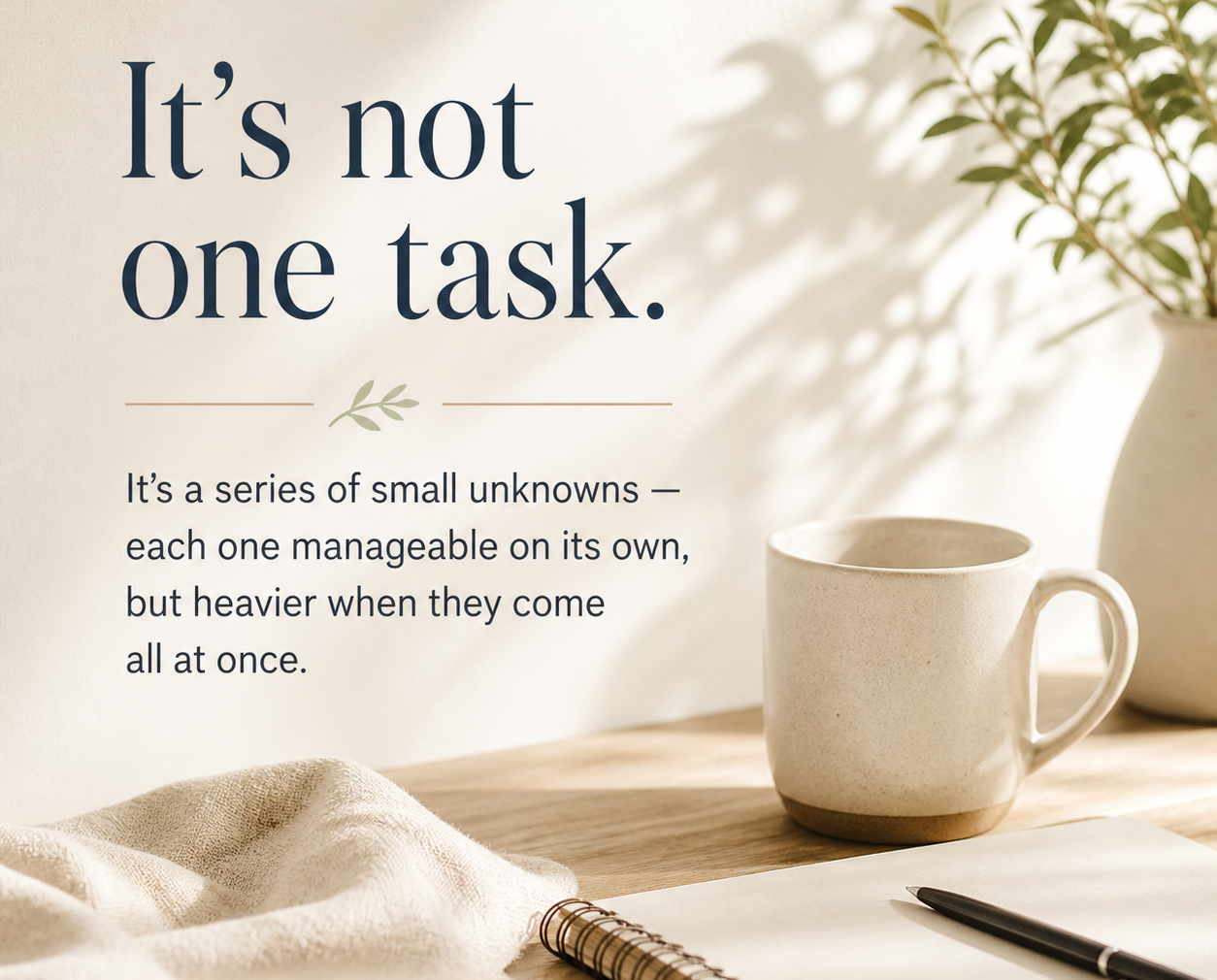
The hardest part for most families isn’t one single task.
It’s the accumulation of small unknowns — each one manageable on its own, but heavier when they come all at once.

f there’s one question worth asking — not out of fear, but out of care — it’s this:
If something happened to me, would someone I trust know how to find what they need?
If the answer isn’t clear yet, that’s okay. It just means there’s an opportunity to make things a little easier for the people who matter most.
If this is something you’ve never been walked through before, you’re not the only one.
Our Wills, Estates, & Final Wishes sessions are designed to gently guide you through the practical side of planning — including the pieces that often get overlooked. There’s no pressure. Just information, conversation, and a chance to ask the questions most people don’t think to ask until later.
Watch the recorded series here: www.parkmemorial.com/wefw