
National Indigenous Peoples Day 2023

Park Memorial • June 21, 2023

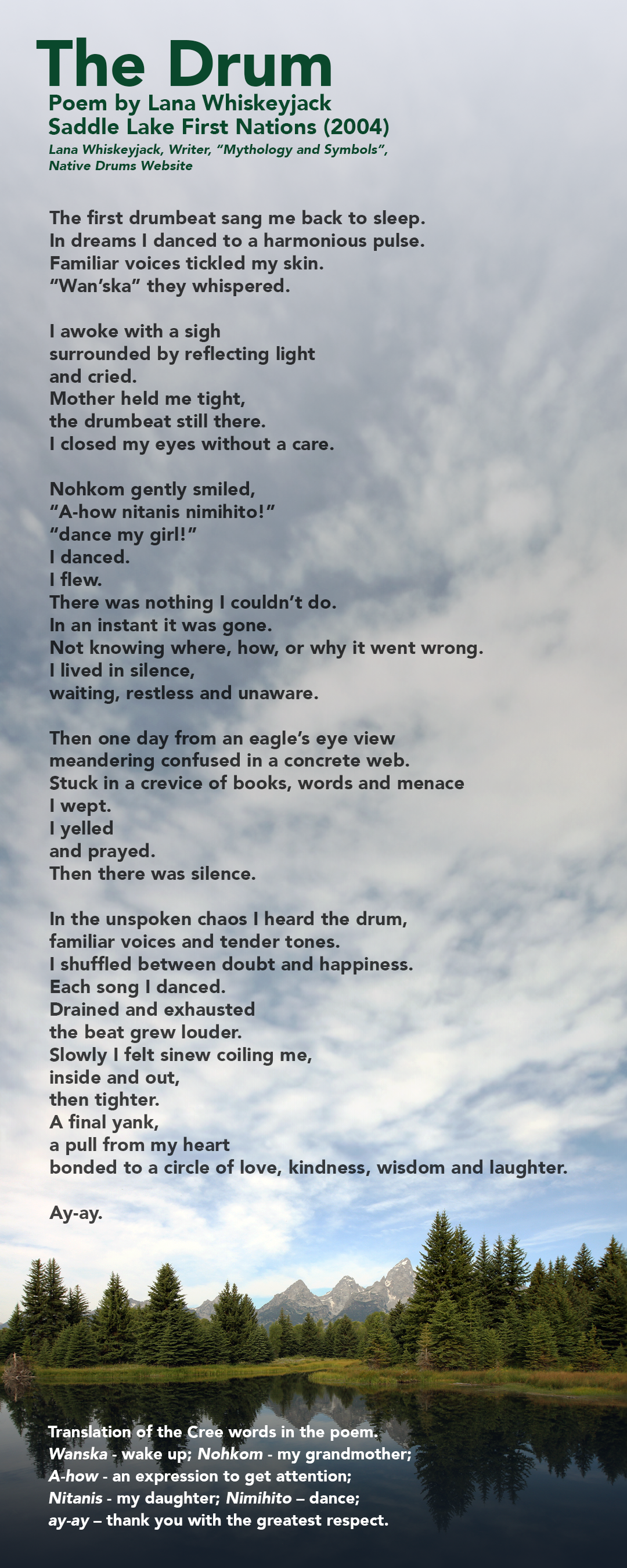
One of the many traditions of Indigenous culture that we as funeral professionals respect and appreciate is the tradition of drumming.

There is something almost reverent at being present when a family honours their loved one with the moving tradition of drumming. The rhythm seems to reverberate through your body and soul as you listen to its solid beats… 


“Drum is a voice, a prayer to Spirit, is the voice of the Earth coming through to speak of its heart. Drumming connects us to our Creator, connecting our heart to the heartbeat of the Earth. It is a way to connect one’s spirit with the Great Spirit.” ~Terriea Harris, BWSS Aboriginal Women’s Outreach Counsellor 


The drum is looked upon as the heartbeat of each soul, also connecting us to the heart of Mother Earth. Music and song are among the First Peoples’ strongest traditions, and the drum is the sound of every life occasion from birth through death.
This piece that aired on CBC a few months ago explains not only the importance of drumming to the ceremony of a loved one crossing over to the spirit world, but also some of the other traditions maintained by First Peoples during and after the death of a loved one: Inside an Indigenous funeral: How a First Nation sends a member to the spirit world | CBC News 


On this National Indigenous People’s Day, our Park Memorial team is grateful for our opportunity to serve our Indigenous community and experience their beautiful culture and customs in honouring the life of a loved one. 


May we all dance in our souls to the beat of ‘Drum’… 


To learn more about Indigenous funeral traditions, please visit our National Truth and Reconciliation Day blog post.
By Park Memorial July 6, 2026
Wherever you find yourself on your grief journey, we hope you'll know there is always a place for you here. We look forward to continuing to walk alongside you in the months ahead.
By Park Memorial June 2, 2026
What families often discover in the days after a death — and how a little preparation can make a difficult time more manageable. 
By Park Memorial May 27, 2026
There are some numbers that are simply difficult to comprehend. A single blood donation can contain approximately: 1 trillion red blood cells , 40 billion platelets, Trillions of plasma proteins and particles that help support healing, clotting, and immunity.
By Park Memorial May 19, 2026
Being seen is one of the most meaningful gifts we give our loved ones. After someone dies, families often find themselves searching for more than paperwork and photographs. They search for stories.
By Park Memorial May 13, 2026
Sometimes grief reveals more than we expected. Sometimes grief brings more than absence. Sometimes it brings discovery.
By Park Memorial April 30, 2026
Last weekend, our team had the honour of joining the Pilgrims Hospice Society for their annual Hike for Hospice fundraiser — alongside families, friends, and members of our community who understand, in their own way, what it means to carry loss.
By Park Memorial March 30, 2026
At Park Memorial, we believe the spaces where families gather to remember and honour a loved one should feel welcoming, comfortable, and cared for — in every season.
By Park Memorial February 25, 2026
Last night, our Park Memorial team gathered for a blood donor evening. Nine team members rolled up their sleeves — including three first-time donors — and gave something simple, yet profoundly powerful: time, compassion, and a small donation that has the potential to save lives.
By Park Memorial February 23, 2026
It comes from a place of love. A desire to honour a wish, to keep things simple, to spare people the formality of a gathering they might not have wanted. And that impulse is not wrong. But there is something important that often goes unconsidered in that decision.
By Park Memorial January 29, 2026
At Park Memorial, we often meet families at one of the most emotional moments of their lives. And while we are honoured to walk alongside them in their grief, there is one sentence we hear far too often.
Show More